


Incision & Drainage in Washington, DC
Relieve pressure from a dental abscess with specialized endodontic care at District Endodontics.
When Do We Recommend Incision & Drainage?
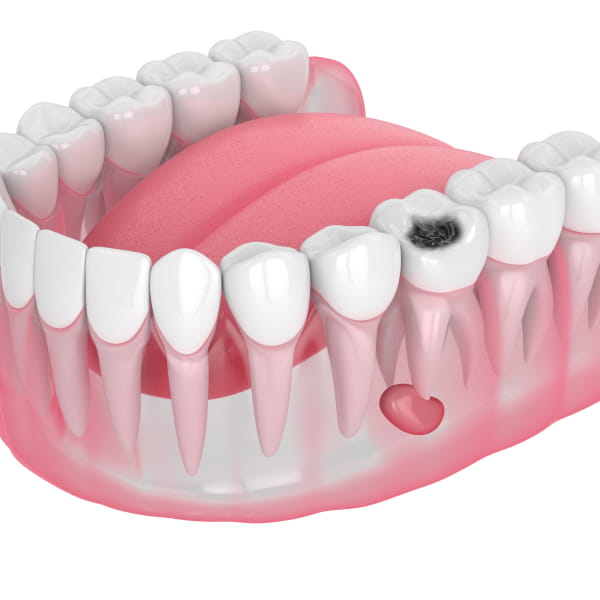
A dental abscess develops when an infection leads to a buildup of pus in or around a tooth. It can cause pain, swelling, tenderness, and pressure in the affected area. When pus collects in the surrounding soft tissue, incision and drainage may be recommended to help relieve pressure and manage the infection.
Incision and drainage is a minor surgical procedure in which your endodontist makes a small opening in the affected soft tissue, allowing the pus to drain. Releasing this buildup can reduce pressure and discomfort while helping control the infection.
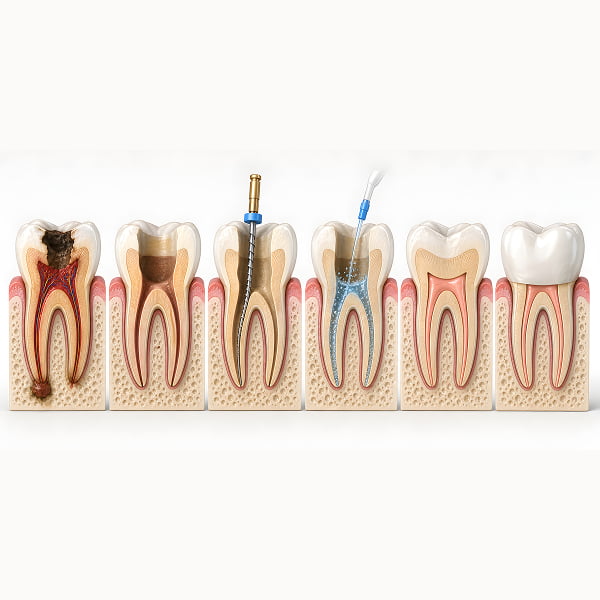
Although drainage can provide relief, it may not eliminate the source of the infection. Depending on the cause, additional treatment, such as root canal therapy or another appropriate procedure, may be needed to address the underlying problem and help preserve your natural tooth whenever possible.
At District Endodontics, we use specialized diagnostic techniques to evaluate dental infections and determine the most appropriate approach for your tooth. We’ll explain our findings, discuss your options, and help you understand the next steps.
If swelling makes it difficult to breathe or swallow, go to the nearest emergency room immediately.
How We Perform Incision & Drainage for a Dental Abscess
Before the procedure, your endodontist will examine the affected area and use dental imaging when appropriate to assess the infection and determine the best approach. The area is then numbed with local anesthesia to help keep you comfortable during treatment. Your endodontist makes a small, precise incision in the affected tissue to release the collected pus, then gently flushes the area with a sterile solution to help clear away remaining debris.
For larger abscesses, a small rubber drain or medicated strip may be placed and secured with a stitch to keep the opening from closing too soon. This allows any remaining fluid to continue draining while the area begins to recover. The drain is temporary and is typically removed after a few days, depending on the infection and your treatment plan.
After the procedure, your endodontist will explain how to care for the area and whether further treatment is needed. Because draining an abscess does not always eliminate the source of infection, root canal therapy or another appropriate procedure may be recommended to address the underlying cause and help preserve your natural tooth whenever possible.

What to Expect After Incision & Drainage
Some soreness and tenderness are normal for a few days after the procedure, and you may notice a little drainage or a bad taste in your mouth at first. We will give you clear instructions before you leave, including how to keep the area clean and how to manage discomfort. If antibiotics are appropriate for your case, we will prescribe them.
Drainage is the first step, not the whole treatment. The source of the infection still needs care, whether that is a root canal, retreatment, or, when a tooth cannot be predictably saved, extraction. Without that step, the infection can return.
Contact us if your swelling worsens, your pain does not improve with medication, or you develop a fever.