

Endodontic Retreatment in Washington, DC
Resolve persistent or recurring infection and save your natural tooth at District Endodontics.
What Is Endodontic Retreatment?
Root canal therapy doesn’t always heal as expected, and when it doesn’t, that’s not the end of the road. If a previously treated tooth shows signs of recurring infection, endodontic retreatment may be the next step toward saving it. At District Endodontics, Dr. Zand and his team carefully and thoroughly evaluate every case before extraction is considered.
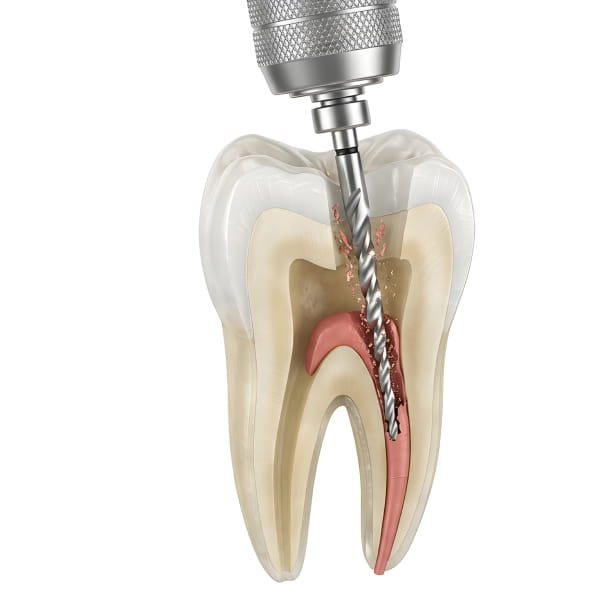
Initial endodontic treatment usually involves a root canal. During this procedure, the pulp—the soft tissue inside the tooth that keeps it alive—is removed to clear the infection and prevent it from spreading.
Most of the time, this resolves the problem entirely. But when it doesn’t, retreatment by an endodontist gives the tooth a second chance.
When Is Endodontic Retreatment Necessary?

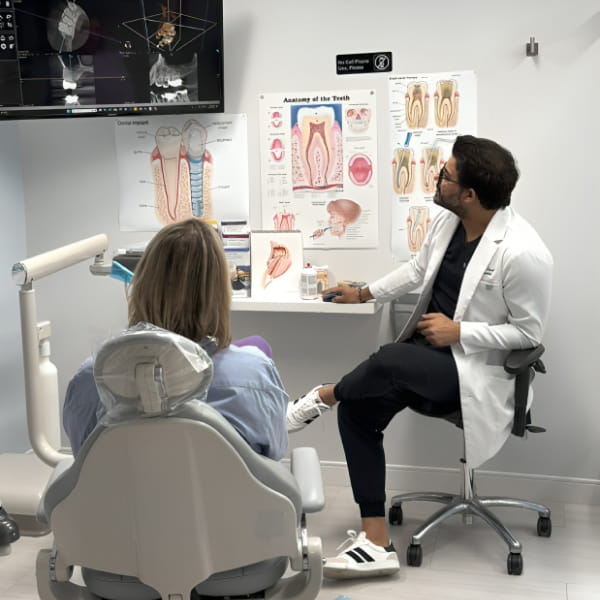
At your consultation, Dr. Zand will thoroughly evaluate your tooth to determine whether retreatment is the right path forward. This includes a comprehensive examination using CBCT 3D imaging and digital X-rays—tools that reveal what standard imaging often misses.
Before recommending retreatment, we take the time to walk you through every available option. Depending on your case, alternatives may include apicoectomy surgery, regenerative endodontics, or, in cases where the tooth is no longer restorable, an extraction to protect the surrounding teeth and your overall oral health.
Retreatment is typically recommended when you have:
The Retreatment Process
Endodontic retreatment is very similar to a routine root canal, and at District Endodontics, we make sure your experience is even easier than getting a filling. Treatment begins with a local anesthetic to ensure you feel nothing but pressure. For patients with dental anxiety, conscious sedation may also be recommended.
Once you’re fully numb, we remove the existing crown or filling to access the tooth. The previously treated canals are thoroughly cleaned, along with any canals that weren’t addressed the first time. Every procedure at District Endodontics is performed under a surgical operating microscope, ensuring that no trace of infection, however small, goes undetected.
After the canals are completely clean, we replace the gutta-percha—a rubber-like material that seals the canals and protects them from reinfection. A temporary filling is then placed to protect the tooth while your final restoration is being prepared.
After that, you’ll visit your general dentist to ensure your permanent crown or filling is placed promptly—because protecting the work we’ve done together matters just as much as the treatment itself.