


Root Canals in Washington, DC
Stop toothaches and save your tooth at District Endodontics.
Painless Root Canals
It's possible to save a decaying tooth with root canal surgery.
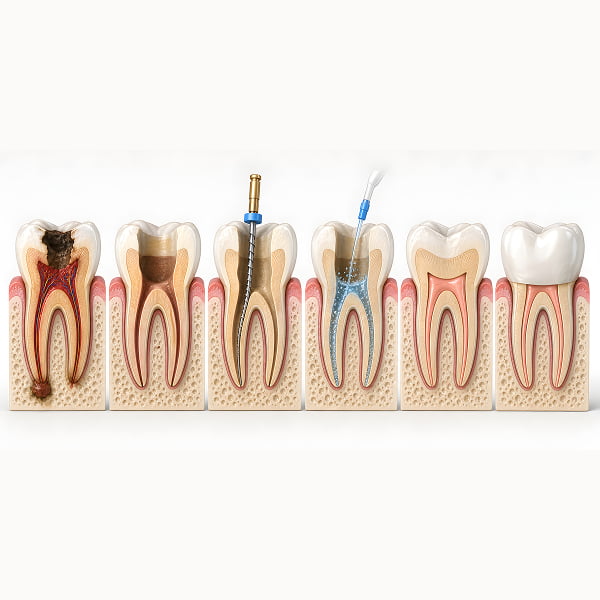
Do you have a severely infected and sore tooth that requires a root canal, but afraid of surgery? Many years ago, root canals may have been painful, but with today’s anesthetics and improved treatment methods, patients feel comfortable during and after the quick procedure.
The truth is, you’ll feel more pain living with tooth decay than you will be during a root canal to fix the problem.
Signs you need a root canal:
Don’t let your toothache turn into tooth loss.
Benefits of a Root Canal
Root canals are safe, and the procedure can prevent the tooth infection from spreading
The procedure is painless with anesthetics and stops persistent toothaches
Root canals can save a tooth and are a great investment in your smile and long-term oral health
Root canals with District Endodontics are simpler than you think.
A root canal procedure is a straightforward treatment that relieves toothaches and can save your tooth. If a tooth’s root is infected, a root canal is needed to clean out the area, remove the pulp in the tooth, disinfect it, and fill the spot.
-
Step 1
After examining your tooth and X-ray to see the full extent of decay, we plan out the procedure. We’ll let you know exactly what to expect before your root canal procedure.
-
Step 2
On the day of the root canal treatment, we apply a numbing agent to the area and clean out the decay. The root canal and pulp chamber areas are cleaned and dried. If needed, medication may be applied directly to clear up the infection as well. If the infection has spread, antibiotics may be prescribed.
-
Step 3
Once the infection is cleared up and the tooth is dried, we fill the inside of the tooth with a safe, biocompatible material known as gutta-percha and seal the tooth with a temporary filling. Later on, your general dentist may recommend a crown (tooth cover) or a permanent filling to protect the tooth and restore its functionality.
When a tooth has a deep cavity, decay, or crack, bacteria can enter the inside of the tooth and cause severe damage and pain—root canals fix this. If not treated in time, a tooth cannot be saved and may have to be extracted and replaced with a dental implant, which is more complicated and takes longer to heal.
Don’t settle for a life with a bad toothache and risk tooth loss; get a safe and painless root canal in Washington, DC.

-
Is a root canal painful?
While most people think root canals are painful, they work to reduce your pain long-term. Needing a root canal is actually more painful than the procedure itself.
We use numbing medicine so that you’ll feel minimal discomfort, and over-the-counter medication can ease any post-procedure discomfort.
With anesthesia, a root canal isn’t any more uncomfortable than a regular dental filling or tooth removal. We know it doesn’t sound fun, but we promise it won’t hurt!
-
How long does a root canal take?
The time of a root canal treatment depends on each patient and the severity of infection and decay. Most root canals take under an hour or up to 90 minutes, depending on the procedure. Typically, we complete them in one or two visits.
-
What happens during a root canal?
During a root canal, the infected pulp inside the tooth is removed, and the tooth interior is thoroughly cleaned and disinfected. Once cleaned, the tooth is filled and sealed with a safe rubber-like material called gutta-percha.
Your general dentist will usually follow up with a filling or a dental crown on top of the treated tooth to protect the tooth and restore its functionality. Root canals are a safe procedure that can preserve your smile.
-
Are you awake during a root canal?
You’re awake during a root canal, but we use anesthesia for a painless and comfortable procedure. In some cases, if you’re extremely anxious about dental visits, we may recommend an oral conscious sedation medication after reviewing your medical condition. Generally, most of our patients report that root canals aren’t any worse than a regular filling.
-
What are the disadvantages of a root canal?
Root canals have the power to save a tooth, but sometimes a tooth can’t be saved, and a dental implant is required to replace the missing tooth.
Root canals are safe and effective in removing bacteria, and the results last a long time, even a lifetime. One-on-one consultation and an exam of your teeth will determine if a root canal is right for you.
The real danger is ignoring signs of a tooth infection or decay, which can lead to serious health issues if the infection spreads. Schedule your consultation for a root canal at District Endodontics in Washington, DC or Gaithersburg, MD.