


Root Canals Safety in Washington, DC & Gaithersburg, MD
What Is Root Canal Therapy?
A damaged tooth is a common dental problem that affects many people. However, despite being common, it can lead to an unbearable experience—pain and inflammation—and if left untreated, it can result in the loss of the tooth and the spread of infection to other teeth, the gums, and the jawbone. It is therefore important to treat the tooth as soon as possible, which not only helps to save it but also prevents additional dental problems. At District Endodontics, we offer specialized root canal therapy for damaged teeth, in addition to root canal retreatment and micro endodontic surgery using advanced 3D imaging and dental microscopes.
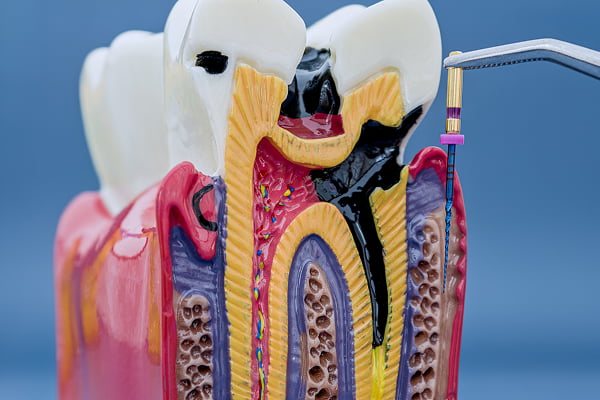
Root canal therapy is a dental treatment used to repair and save damaged teeth. The treatment involves treating the root canal—the innermost part of the tooth that contains pulp, nerve endings, and blood vessels. During the treatment, the damaged or infected pulp matter is removed, and then the canal is cleaned and filled to prevent further infection and complications.

When Is a Root Canal Necessary?
A root canal treatment is necessary when your tooth is infected as a result of decay and when the infection has spread to the pulp. Root canal therapy might also be necessary following dental trauma if the injury has caused damage to the innermost parts of the pulp.
It is possible to identify whether you might require root canal treatment through the following symptoms of a damaged or infected tooth:
The Root Canal Treatment Procedure
If you are experiencing any signs or symptoms of an infected tooth or have experienced dental trauma, you should immediately visit us. During the visit, we will evaluate the condition of the affected tooth using dental X-rays to determine if you require treatment. If we determine you need treatment, we will then proceed with the procedure.
The root canal procedure is safely carried out under local anesthesia, which is applied around the affected tooth. An additional comfort layer using oral conscious sedation might also be offered, depending on your specific situation.
When ready, the tooth will be covered with a rubber dam to ensure that it remains dry during the procedure. An access hole will then be made to the root canal by carefully drilling into the tooth. The damaged or infected pulp material will then be removed, and the canals will be cleaned, disinfected, and shaped thoroughly to remove any remaining damaged or infected tissue.
After the canals are cleaned and disinfected, they are filled and sealed with gutta-percha, a rubber-like biocompatible material that helps prevent bacteria from re-entering the tooth. A temporary filling is then placed over the access opening. You will follow up with your general dentist, who will determine whether a permanent filling or a dental crown is the right restoration for you.